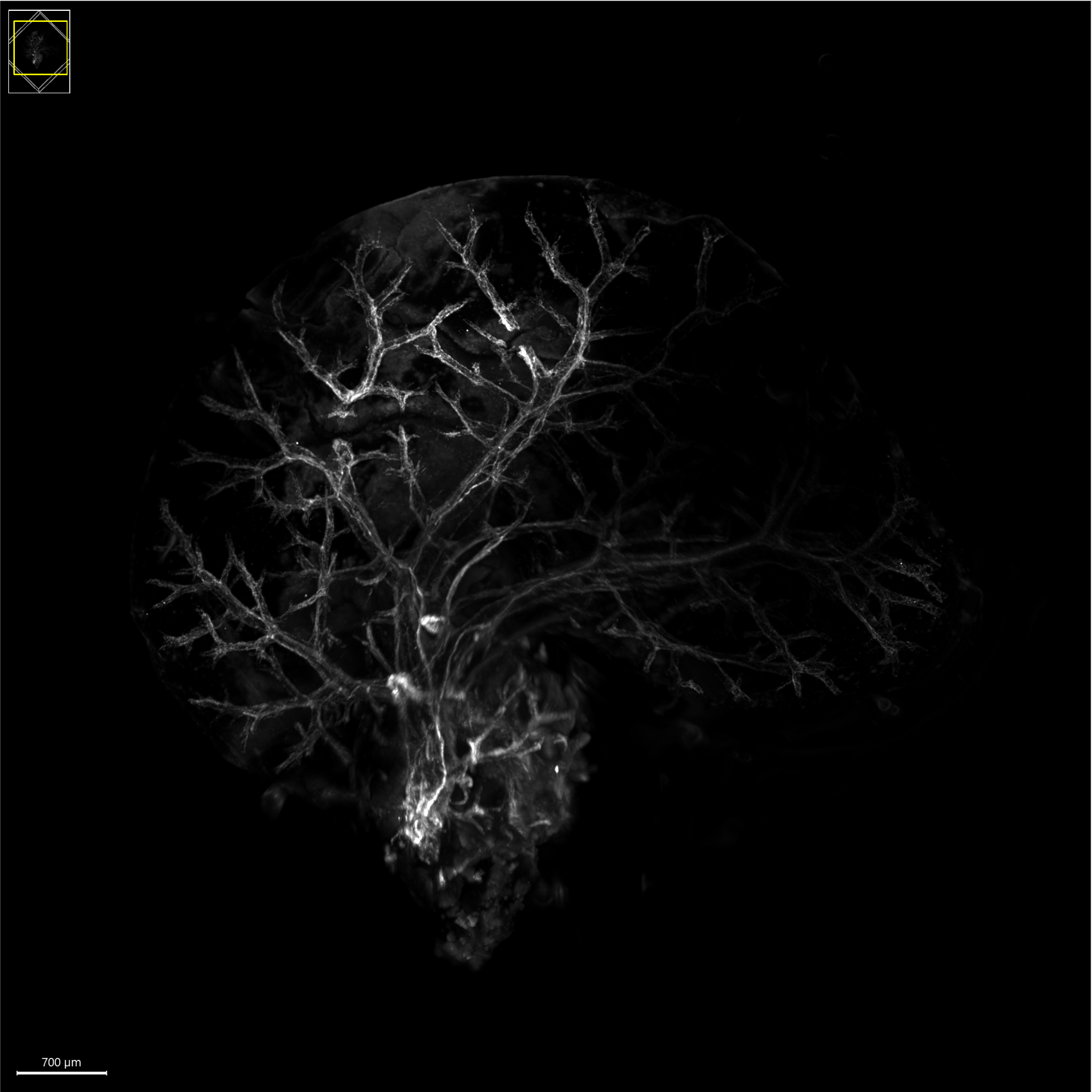
The three-year grant, worth $1 million, is part of the largest-ever grant programme launched by the American Association for Cancer Research (AACR), which aims to support promising scientists at critical junctures in their careers. Correia was one of 15 researchers selected to share a total of $15 million to pursue paradigm-shifting ideas in cancer biology, with the ultimate aim of improving patient outcomes.
She is the only awardee based in Portugal and one of a small number of researchers selected outside the United States.
Correia’s project, ‘Neuro-immune regulation of metastatic breast cancer dormancy’, tackles one of the most urgent challenges in cancer research: metastasis – the spread of cancer to other parts of the body, which is responsible for the vast majority of cancer-related deaths.
When cancer spreads, individual cancer cells can travel from the original tumour to distant organs, such as the liver. These cells, known as disseminated cancer cells, can remain hidden and dormant for years before suddenly “waking up” and forming new tumours. These dormant cells are one of the reasons cancer can return long after initial treatment.
“Although these cells are fully cancerous, they can lie low for years”, explains Correia. “Understanding what keeps them dormant – and what triggers them to grow again – is one of the biggest open questions in cancer research”.
Her project proposes that this switch is controlled by a previously underexplored system: long-range communication between the nervous system and the immune system, together with surrounding support cells in tissues. In simple terms, she is investigating how signals from nerves and immune cells combine to either keep cancer cells in a dormant state or allow them to grow.
The research will focus on the liver, one of the most common and deadly sites of breast cancer metastasis. By combining expertise in cancer biology, immunology, neuroscience and computational analysis, the team will study how disseminated cancer cells interact with their new environment using unique mouse models, human samples and advanced technologies that examine tissues cell by cell and map where different signals occur.
The goal is to understand how this neuro-immune communication network puts cancer to sleep, and why it breaks down in a way that allows cancer to reawaken. Ultimately, this work could open the door to a truly transformative type of treatment. Instead of trying to eliminate cancer cells after metastases have formed, researchers could aim to keep them permanently dormant or expose them to immune cells engineered to kill them in their sleep.
“This Trailblazer will catalyse my lab’s efforts to understand how long-range communication between the nervous and immune systems controls the formation of tissue-specific metastases”, says Correia. “This is among the most exciting challenges in cancer research for the coming years, and pioneering it will fulfil my ambition to become a leader in the field”.
By uncovering how the body’s own systems regulate the establishment of metastases, the research aims to lay the foundation for neuro-modulatory immunotherapies that effectively prevent metastasis and improve outcomes for patients with breast cancer.
About Ana Luísa Correia
Ana Luísa Correia studied Applied Biology at the University of Minho, Portugal. She completed her PhD at Lawrence Berkeley National Laboratory in the United States, where she investigated how the cellular environment influences breast cell invasion. She then carried out postdoctoral research at the Friedrich Miescher Institute and the University of Basel in Switzerland, focusing on tissue-specific mechanisms that control breast cancer progression.
She now leads the Cancer Dormancy & Immunity Lab at the Champalimaud Foundation in Lisbon. Her research explores how disseminated cancer cells interact with the unique environments of different organs, with the goal of translating this knowledge into more effective therapies to prevent metastasis.
Image Caption: Fluorescence microscopy image showing the highly branched tree of nerve fibres (in white) innervating the mouse liver.
Credit: Andreia Gonçalves and Lena Jansen.
Text by Hedi Young, Science Writer and Content Developer of the Champalimaud Foundation's Communication, Events & Outreach Team