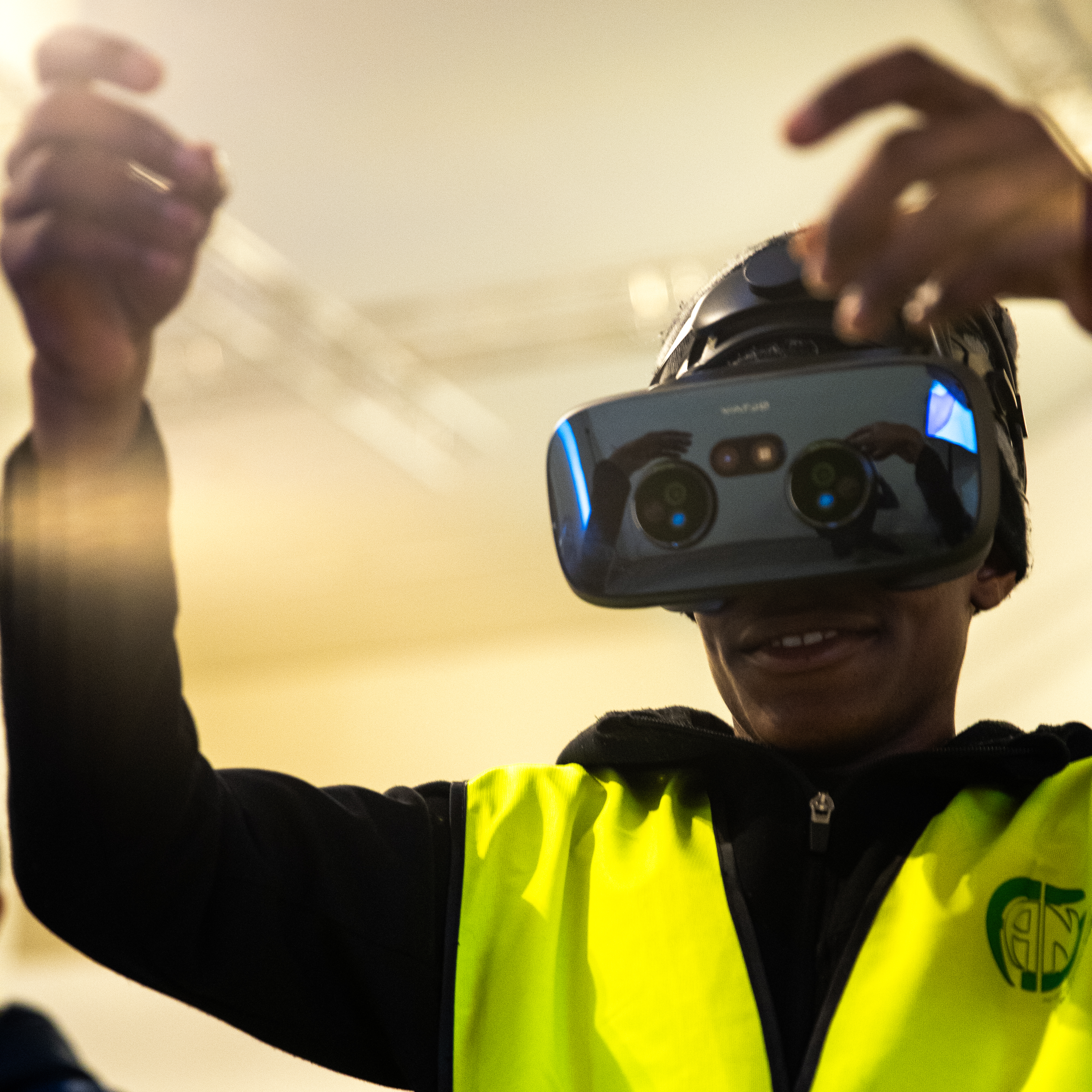
Now in its 5th edition, CNM continues to strengthen connections between schools and research institutions. In Phase I, scientists from the GIMM Foundation and the Champalimaud Foundation introduced the programme to more than 100 8th-grade students at Escola Dr. Azevedo Neves (Damaia, Amadora). Phase II then brought students and teachers into the research environment.
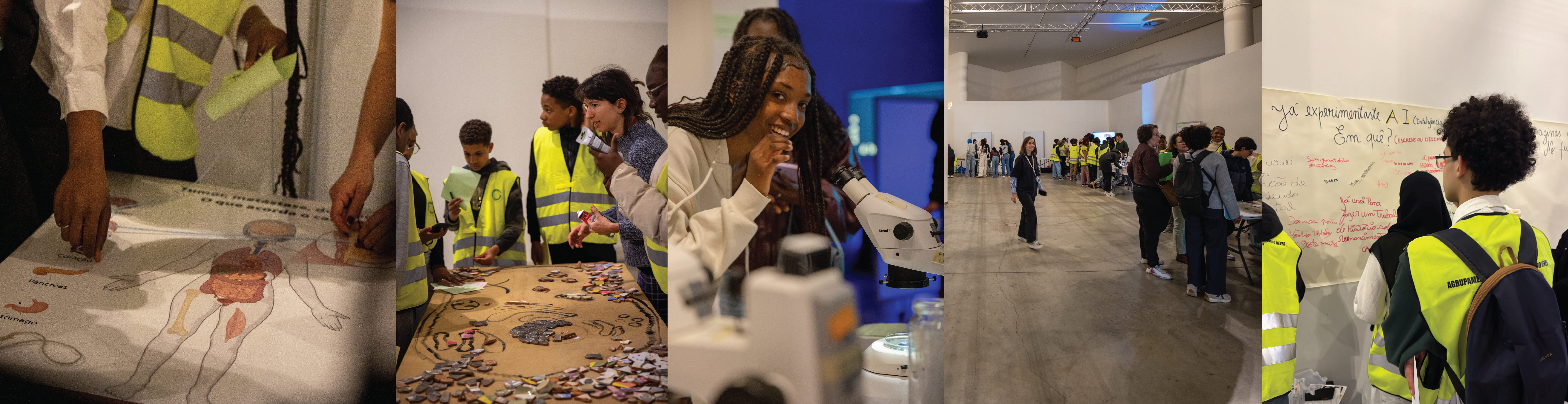
For one day, the GIMM Institute and the Champalimaud Foundation were transformed into vibrant, hands-on learning spaces. Around 60 volunteers from both scientific communities designed and led a diverse set of interactive activities, offering students a unique opportunity to explore science from multiple perspectives.
From The wonderful world of Drosophila to Augmented reality in medicine, including topics such as zebrafish in research, cancer biology, optics, creative science-based games and artistic-scientific practices, the programme combined experimentation, discovery and dialogue, bringing science to life in engaging and accessible ways.
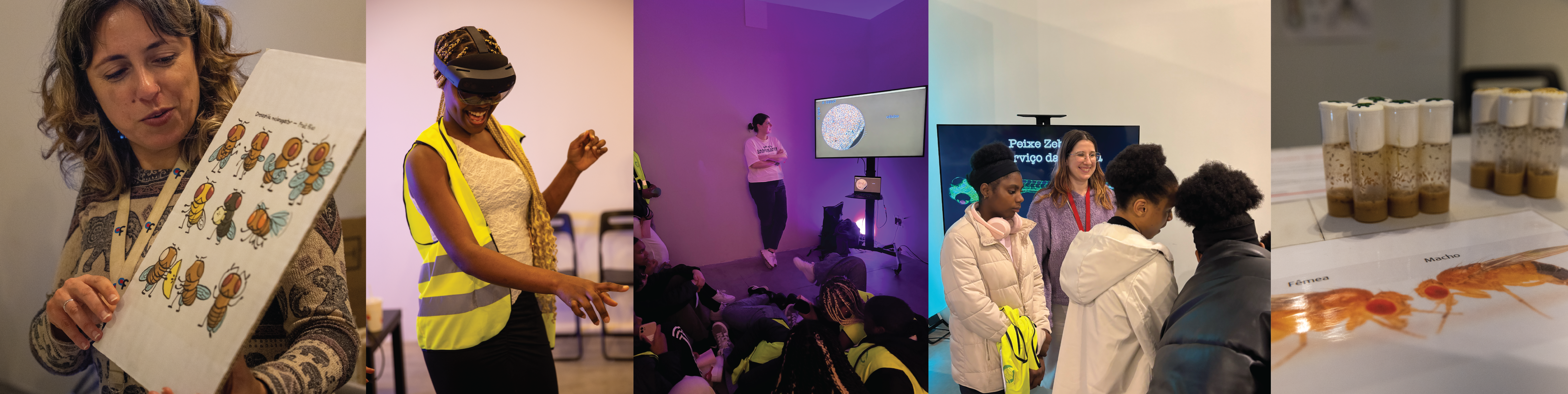
The impact was felt on all sides. Students and teachers left inspired, while researchers valued the chance to share their work, reflect on its broader significance and contribute to a more inclusive scientific culture. These exchanges highlight the reciprocal nature of outreach, shaping future generations while enriching the scientific community.
Participant feedback has been overwhelmingly positive, underscoring the importance of initiatives that expand access to science and foster curiosity and belonging. In many moments, it was possible to see horizons widening in real time.
CNM now moves into Phase III, with mentoring sessions taking place at the school, further strengthening relationships and supporting students as they envision their own paths.
Since its launch, CNM has reached over 1,000 students, engaged around 200 members of the scientific community, partnered with four TEIP (“Territórios Educativos de Intervenção Prioritária”) schools and involved two leading research institutions.
Text by Catarina Ramos, Co-coordinator of the Champalimaud Foundation's Communication, Events & Outreach Team