
- Platforms
About
Experimental Magnetic Resonance Imaging (MRI) Platform
Experimental Magnetic Resonance Imaging (MRI) Platform
The mission of the Experimental MRI Platform is to support and advance scientific and biomedical research by providing access to state-of-the-art preclinical MRI technology.
We are dedicated to facilitating highquality imaging for research projects within the Champalimaud Foundation and for external collaborators.
MRI is non-invasive, allows for longitudinal follow-up (e.g. tumor/phenotype evolution, therapy response, growth/aging studies), allows for good sample coverage (e.g. whole-brain imaging) and yields very high resolution images (cannulas accurate localization).
With advanced methods, it can also provide functional measurements, not only about the sample structure.
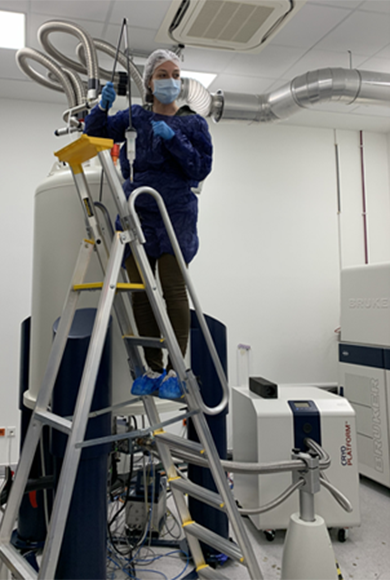
Equipment
Experimental Magnetic Resonance Imaging (MRI) Platform
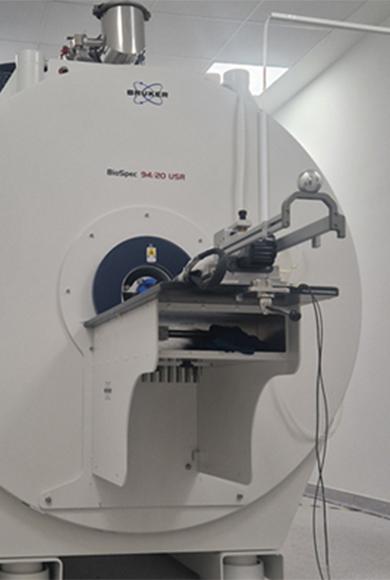
Ultra-High Field Magnetic Resonance Imaging Scanners
The Platform service consists on the acquisition (and optional processing) of MRI images with one of the following scanners from the vendor Bruker:
- 1T Icon scanner: Easy to use, less distortions, ideal for tumor follow-up, diameters up to 6 cm
- 9.4T Biospec scanner: Easy to use, ideal for in vivo longitudinal studies, high resolution, advanced methods, cryoprobe signal enhancement (mouse and rat), diameters up to 20 cm
- 16.4T Aeon scanner: Microscopic resolution, advanced acquisitions, ideal for microstructure characterization of ex vivo samples, cryoprobe signal enhancement, diameters until 20 mm mainly
With these Ultra-High Field Magnetic Resonance Imaging Scanners we can image rodents in vivo, perfused tissues (brains or others) and human tissue samples, and other biological specimens.
Team
Experimental Magnetic Resonance Imaging (MRI) Platform
Know our Team

Cristina Chavarrías, PhD
Platform Head

Tatiana Diogo
Research Technician
