
- Research Groups
About
Gallego Lab
Gallego Lab
Our ability to move is acquired during development and continuously expanded and flexibly adapted during our lifetime.
Yet, the details of how our brains endow us with malleable motor repertoires remain elusive. Lesion studies and observations in neurological patients identified key cortical and subcortical regions that are necessary for movement.
Further studies in animals revealed that these contributions can be surprisingly fluid: lesions to a specific brain region can have no effect when executing some learned skills, even if animals cannot learn those skills without it. In the lab, we combine behavioural experiments in humans and rodents with neural recordings, targeted manipulations, and theoretical and computational approaches to understand how evolving interactions among cortical, subcortical, and spinal regions allow us to learn and execute motor skills. We further aim to close the discovery-to-translation cycle by leveraging our findings to engineer neurotechnologies that restore movement to people with the neurological conditions we study.
The lab still has a foot at Imperial College London, while we relocate to the Champalimaud Foundation.
Projects
Gallego Lab
Team
Gallego Lab
Know our Team

Juan Álvaro Gallego, PhD
Principal Investigator

Francesco Costantino
PhD Student (co-supervised)
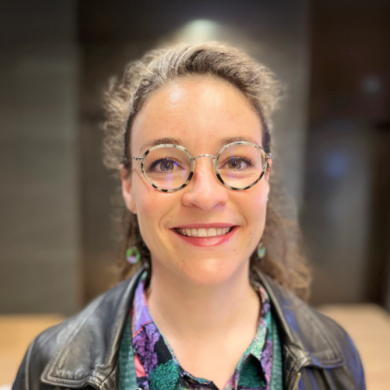
Charline Tessereau, PhD
Postdoctoral Researcher
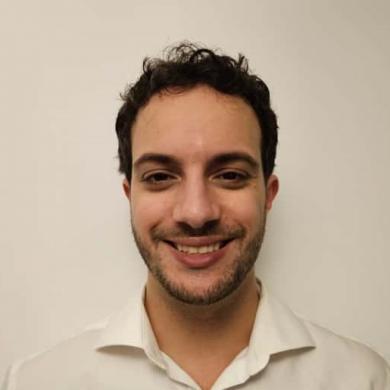
Albert Miguel
Postdoctoral Reseacher

Yun Chen, PhD
Postdoctoral Researcher
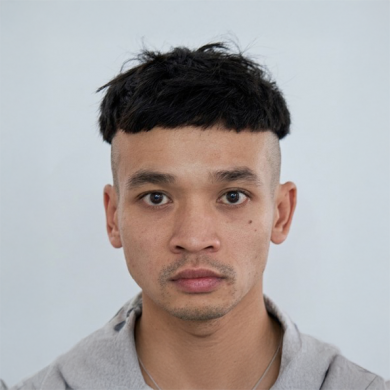
Vinh Nguyen, PhD
Posdoctoral Researcher
Publications
Gallego Lab
M.G. Perich, D. Narain, J.A. Gallego. A neural manifold view of the brain. Nature Neuroscience, 28, 1582–1597, 2025.
B. Feulner, M.G. Perich, L.E. Miller, C. Clopath§, J.A. Gallego§. A neural implementation model of feedback-based motor learning. Nature Communications, 16 (1), 1805, 2025.
A. Grison*, C. Gibbs*, V. Rawji*, L. Gouveia Vila, I. Szczech, R. Varghese, P. Bryan, A. Kundu, X. Yang, J.A. Gallego§, D. Farina§. Multidimensional motoneuron control using intramuscular microelectrode arrays in tetraplegic spinal cord injury. medRxiv, 2025.
J. Park, P. Polidoro, C. Fortunato, J.A. Arnold, B.D. Mensh, J.A. Gallego, J.T. Dudman. Conjoint specification of action by neocortex and striatum. Neuron, 113 (4), 620-636. e6, 2025.
J.C. Chang, M.G. Perich, L.E. Miller, J.A. Gallego§, C. Clopath§. De novo motor learning creates structure in neural space that shapes adaptation. Nature Communications 15:4084, 2024.
C. Fortunato, J. Bennasar-Vázquez, J. Park, J.C. Chang, L.E. Miller, J.T. Dudman, M.G. Perich, J.A. Gallego. Nonlinear manifolds underlie neural population activity during behaviour. bioRxiv, 2024.
J. Gmaz, J.A. Keller, J.T. Dudman§, J.A. Gallego§. Integrating across behaviours and timescales to understand the neural control of movement. Current Opinion in Neurobiology 85, 102843, 2024.
M. Safaie*, J.C. Chang*, J. Park, Lee E. Miller, J.T. Dudman, M.G. Perich§, J.A. Gallego§. Preserved neural dynamics across animals performing consistent behaviour. Nature 623:765-771, 2023.
J.A. Gallego, T.R. Makin, S.D. McDougle. Going beyond primary motor cortex to improve brain–computer interfaces. Trends in Neurosciences 45(3):176-183, 2022.
C. Gallego-Carracedo, M.G. Perich, R.H. Chowdhury, L.E. Miller, J.A. Gallego. Local field potentials reflect cortical population dynamics in a region-specific and frequency-dependent manner. eLife 11:e73155, 2022.
