
22 April 2026
Albino J. Oliveira-Maia
Neuropsychiatry Meets Digital Innovation
22 April 2026
Neuropsychiatry Meets Digital Innovation
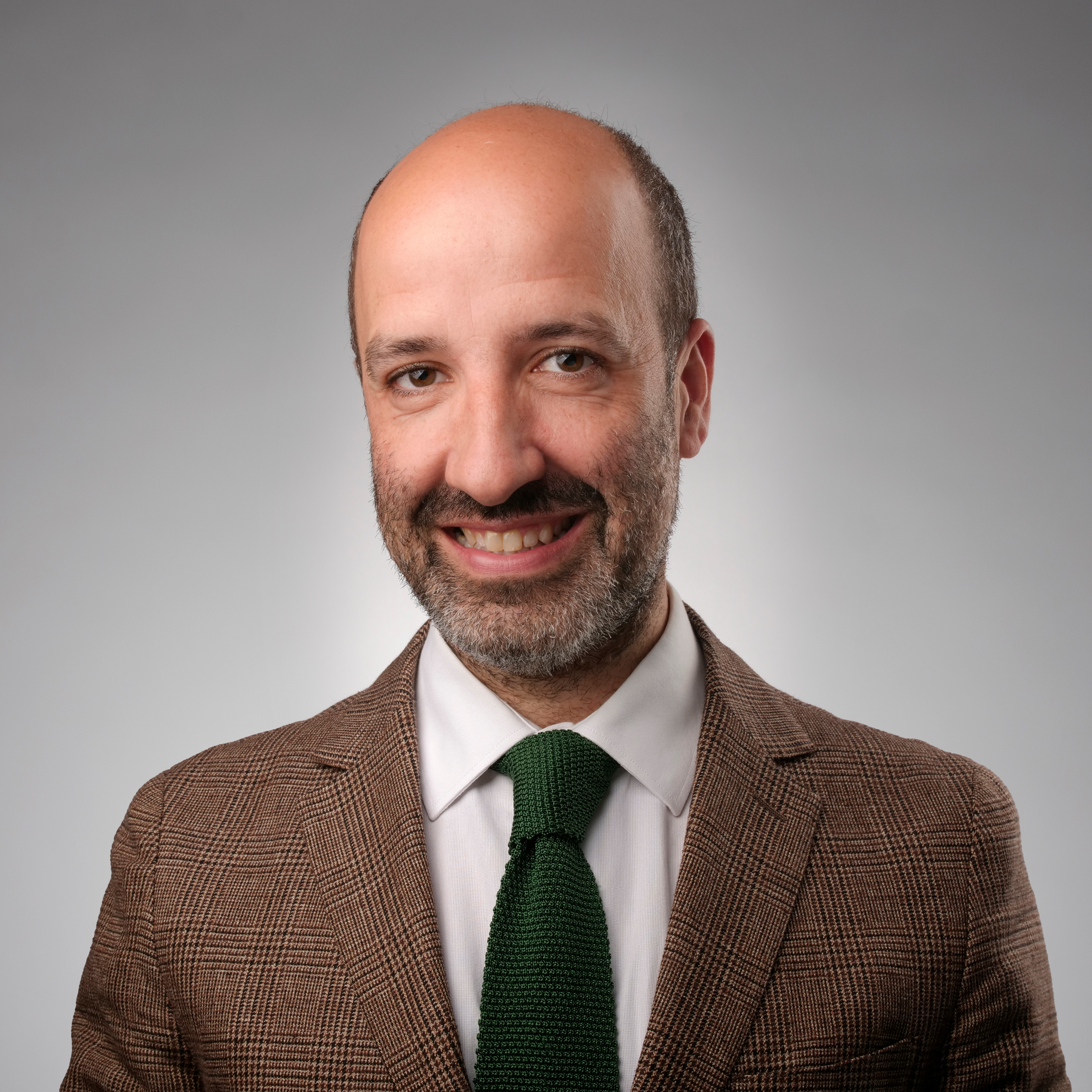
Albino J. Oliveira-Maia is the Director of the Neuropsychiatry Unit at the Champalimaud Foundation and Professor of Psychiatry and Neuroscience at NOVA Medical School in Lisbon. He is also President-Elect of the Portuguese Society of Psychiatry and Mental Health, President of the Scientific Council for the Portuguese OCD Foundation and President of the Ethics Committee at the Institute for Addictive Behaviours and Addictions. Since 2018, he has coordinated the Psychiatry Working Group of the Office for the National Exam for Access to Specialty Training, at the Portuguese Medical Association
With extensive experience integrating emerging technological solutions into patient care, Albino has recently embarked on a new chapter, alongside neurologist Marcelo Mendonça, as director of the Digital Neurotherapeutics Centre (DNTx Centre), at the Champalimaud Foundation – a space dedicated to advancing psychiatry through rigorous, patient-centred innovation.
In this interview, Albino reflects on his path to neuropsychiatry, the evolution of the field, and how the digital tools can expand, without replacing, human-centred care.
My journey wasn’t linear. I actually started in neuroscience. In medical school I was fascinated by how the brain’s structure and function shape disease and treatment. Neurology made this very tangible and I believed that it was going to be my path. However, during my PhD at Duke University, I became immersed in psychiatric research and started attending clinical psychiatry meetings. That’s when it became clear to me that the separation between “neurology” and “psychiatry” is largely artificial; a product of training, not of biology. Indeed, both fields focus on the same organ, governed by the same mechanisms. When I returned to Portugal, after completing my PhD in neuroscience, neuropsychiatry became the natural space for me in medicine.
Traditionally, neuropsychiatry is understood as psychiatry applied to patients with neurological diseases – addressing mental health needs in conditions like epilepsy, Parkinson’s, or Alzheimer’s. But at the Champalimaud Foundations’ Neuropsychiatry Unit, our approach is broader. We bring together psychiatrists and psychologists with strong neuroscience backgrounds and neurologists who recognize the psychiatric dimensions of their patients’ care. Patients are seen by different specialists in a deeply interconnected way. Cases are discussed collectively, and care evolves as patients’ needs change. The brain doesn’t obey disciplinary boundaries – so neither should we.
They are inseparable. Our work on Obsessive-Compulsive Disorder (OCD) is a good example. It began as a research question, inspired by work performed in animal models: how to study decision-making and action control in patients for whom I was also providing clinical care?
The gap between what research suggested and the care patients were receiving was striking. When the clinical pillar of our unit was established, OCD became a priority. We developed structured assessments, implemented a Transcranial Magnetic Stimulation (TMS) programme, and integrated psychotherapy into care pathways. Research informed clinical care, and the clinical challenges fed directly back into research. Today, the OCD programme continues to evolve, including in our current work using AI to personalize symptom provocation and enhance exposure therapy for these patients.
We treat patients with primary neurological diseases who require psychiatric and psychological care, as well as psychiatric patients who could benefit from neurological expertise or from a neuroscience-informed approach. While the clinical entry point – neurology or psychiatry – may be clear, the path forward often isn’t. A patient may start with a neurologist like Marcelo Mendonça and then transition to psychiatric care, or the other way around. The key is flexibility, shared decision-making and communication. Our goal is to avoid silos and keep the patient at the centre.
The turning point was recognizing how technology could help address real gaps in care. Going back to the same example, in OCD, symptom provocation while using TMS is traditionally time-intensive and difficult to adjust as symptoms change. With the support of generative AI, we expect to personalize this process dynamically, under clinical supervision. This is the promise of digital neurotherapeutics: making treatments more accessible, adaptive and effective.
For many patients, it means more treatment options and, for some patients, access to care they didn't have before. Some will continue to prefer fully face-to-face therapy, others may choose and benefit from digital tools that complement traditional approaches. The balance, however, must be evidence-based. If a digital intervention is safe, effective, and rigorously tested, it should be part of our therapeutic toolkit. That being said, the human component remains irreplaceable. Trust, responsibility, and the therapeutic relationship remain at the core of medicine and psychology. Technology can enhance these pillars, but it cannot substitute them.
The boundary between them is fluid. They share people, projects, and purpose. On paper, someone might belong to a lab or the "clinic” but, in practice, they work across both. The DNTx Centre is a separate structure but also an evolution of what was already there. A space to develop, test, and implement digital tools alongside established clinical care. In this transition, when I invited members of the Unit to reflect on their work and aspirations, many naturally aligned with this vision. That sense of shared purpose is what makes the Centre possible.
In the [Neuropsychiatry] Unit, we already closely collaborate with industry through clinical trials, discovery science, and early access to innovation. The new DNTx Centre expands these activities. The aim is to be a partner for companies developing neurotechnologies, offering a real-world clinical environment where tools can be validated, refined and responsibly implemented This includes neuromodulation, digital interventions, and AI-driven tools.
We are a genuinely interdisciplinary mix. We will need clinicians, neuroscientists, psychologists, alongside AI specialists, engineers, and entrepreneurs. Our OCD programme already reflects this model: bringing together psychologists, TMS technicians, psychiatrists, and now AI scientists. The Centre will attract people who are comfortable working across disciplines and motivated by complex clinical challenges.
In the coming years, I hope we will help establish standards for safety, efficacy, and regulation in this field. My ambition is for this Centre to serve as a model of how academia, industry, and clinical practice can work together to bring meaningful innovation to patients.
More broadly, I see psychiatry closely evolving with technology and not in isolation of it. Clinicians and startups each bring something essential: depth of understanding on one side, agility and bold execution on the other. When they work together, care can truly be improved.
